

Employees have the right to report unlawful workplace conduct and exercise protected workplace rights without fear of retaliation. If your employer disciplined, demoted, reduced your pay, or terminated your employment because you engaged in protected activity, you may have a workplace retaliation claim under federal or Pennsylvania law. The Lacy Employment Law Firm helps employees understand their legal rights and pursue retaliation claims against employers who violate the law.

Workplace retaliation occurs when an employer takes adverse action against an employee because the employee exercised a legal right or engaged in protected activity. Retaliation can occur before, during, or after an investigation and may affect employees at every level of an organization.
Examples of retaliation include:
Not every negative employment action is unlawful. To have a retaliation claim, the employer’s actions must be connected to protected activity recognized by law.
Employees may be protected from retaliation after engaging in legally protected activity, including:
Employees who report discrimination based on race, age, pregnancy, disability, religion, national origin, gender, sexual orientation, or another protected characteristic are protected from retaliation.
Employees who report workplace harassment or participate in an internal or government investigation are protected by federal law.
Employees who report unpaid wages, overtime violations, or minimum wage violations are protected from employer retaliation.
Employees cannot legally be punished for requesting or taking protected leave under the Family and Medical Leave Act.
Employees who report unsafe working conditions or OSHA violations may have legal protections against retaliation.
Employees who report fraud, financial misconduct, or other unlawful activity may also have protections under federal and state whistleblower laws.
Most retaliation claims require employees to prove four basic elements.
Protected activity includes reporting unlawful conduct, filing a complaint, participating in an investigation, requesting protected leave, refusing illegal instructions, or exercising other legal rights.
Your employer must have known about your protected activity before taking adverse action.
An adverse employment action may include termination, demotion, reduced pay, discipline, denial of promotion, reassignment, or another action that negatively affects your employment.
Employees must show a connection between the protected activity and the employer’s actions. Timing, documentation, witness testimony, emails, and other evidence often play an important role in proving retaliation.
Retaliation may occur in many different situations, including:
Employees who successfully pursue retaliation claims may be entitled to compensation depending on the circumstances of the case.
Potential remedies may include:
Every case is different, and available remedies depend on the applicable law and the specific facts involved.
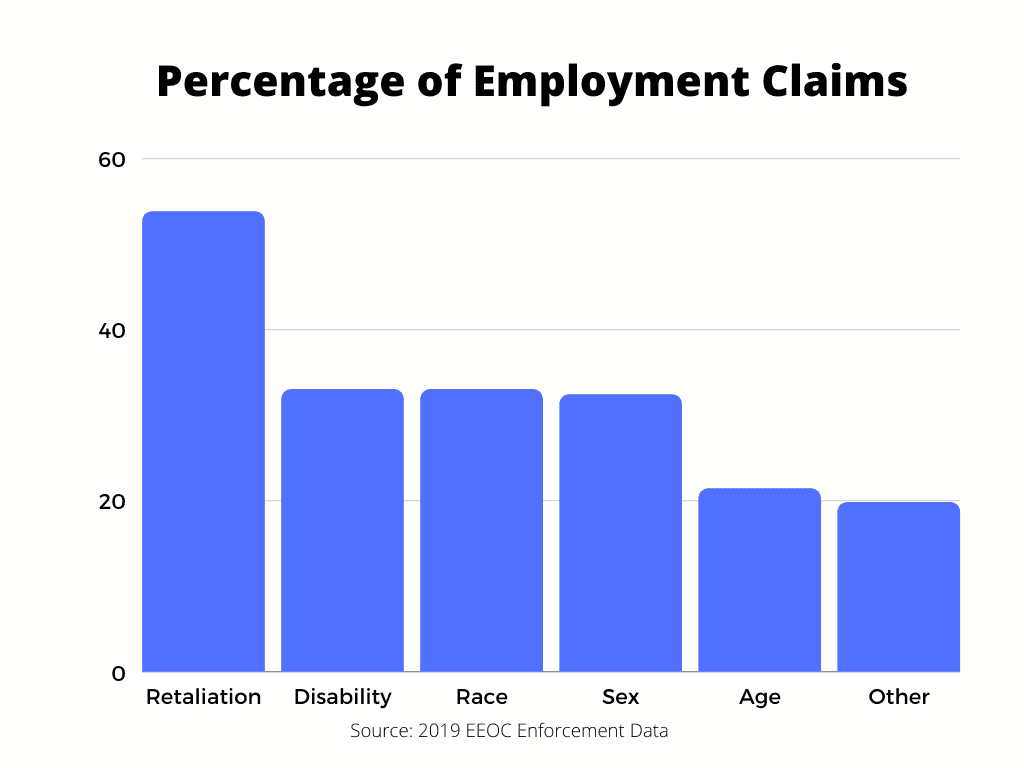
Retaliation can arise in many workplace situations. Depending on the facts of your case, you may have claims under one or more retaliation laws.
Employees who report fraud, safety violations, financial misconduct, or other unlawful activity may be protected from retaliation under federal and state whistleblower laws. Our attorneys can review your situation and explain whether whistleblower protections apply.
Retaliation claims often overlap with other employment law issues. Depending on your circumstances, you may have additional legal claims beyond retaliation.
Employees who report workplace discrimination or participate in discrimination investigations are protected from retaliation. If your employer punished you for exercising these rights, you may have multiple legal claims.
Employees who report workplace harassment are protected from retaliation. If your employer took adverse action after you reported harassment or participated in an investigation, additional legal protections may apply.
If you were fired because you exercised a protected legal right or reported unlawful workplace conduct, you may have both a retaliation claim and a wrongful termination claim.
Employees who report fraud, safety violations, financial misconduct, or other unlawful activity may have protections under federal and state whistleblower laws in addition to retaliation claims.
Retaliation cases are important. This is your protection against company misconduct. It also serves an important public purpose.
Without these laws, companies would be free to treat its employees illegally.
Further, in the past, companies have done things that have harmed the public.
Without employees willing to step up and blow the whistle, companies will continue to do harm.
Whether it’s defrauding investors or polluting the planet, whistleblowers are our best defense.
Remember, there are numerous whistleblower and anti-retaliation laws that provide you with protection. If you want to discuss your case with a retaliation lawyer, we give free consultations.
Have you witnessed illegal workplace behavior? What will you do about it?
If you need a retaliation attorney in Philadelphia or Pittsburgh, we are here to help.
We take many cases on a contingency basis—so you don’t pay unless we win. Reach out and let’s see what’s possible for your situation.