
Workers over a certain age have legal protection against discrimination in the workplace. Three separate laws—one federal and two state—create overlapping safeguards for employees in Pennsylvania and New Jersey who face adverse treatment because of their age. Understanding which law applies to your situation, what deadlines you must meet, and what remedies you can recover requires knowing how these statutes differ.
This guide explains the age discrimination laws that protect workers in Pennsylvania and New Jersey, including who qualifies for protection, which employers are covered, how claims work, and the critical filing deadlines that can determine whether you preserve your right to take legal action.
What Laws Protect Workers From Age Discrimination?
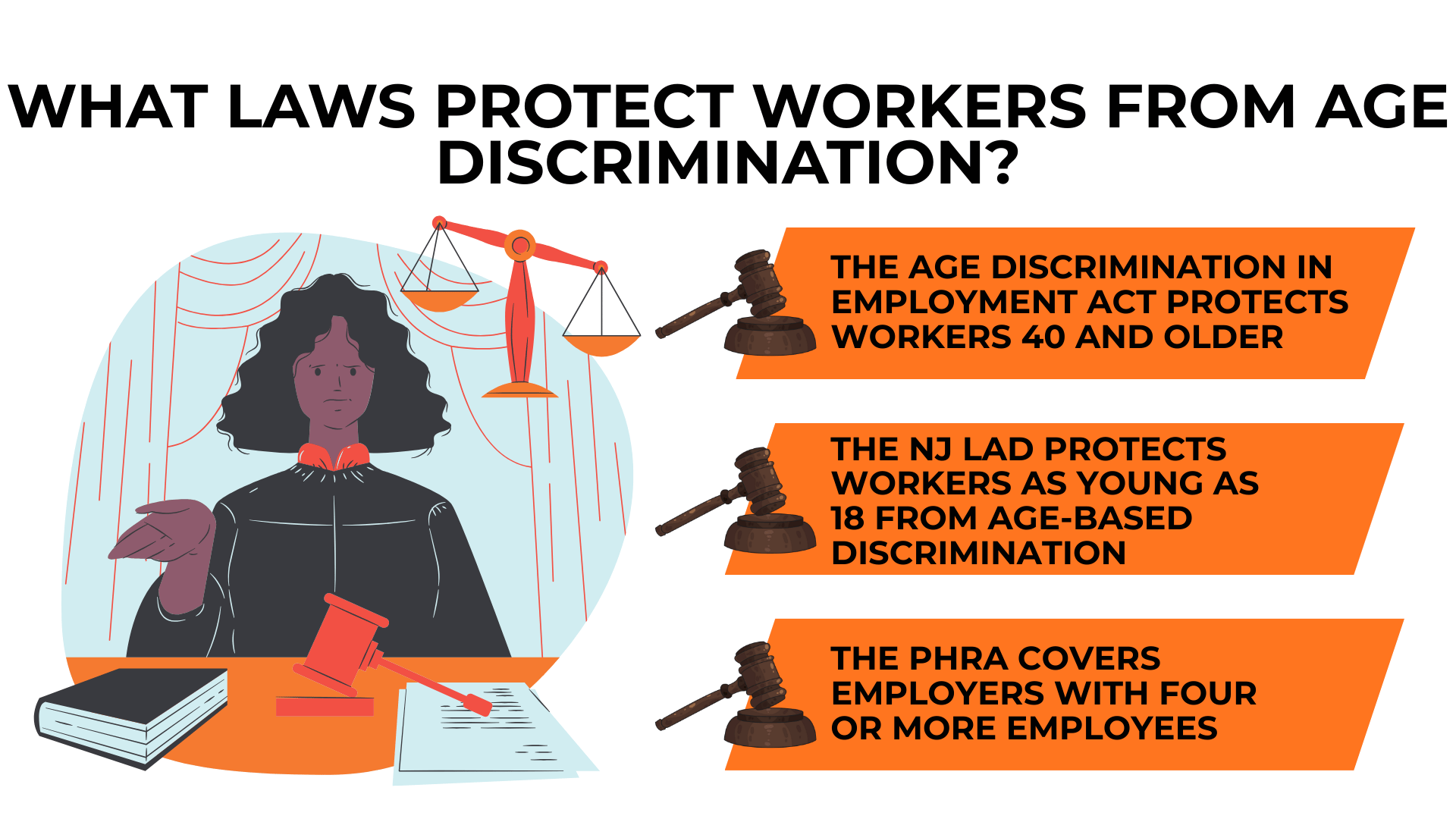
Three statutes form the legal framework for age discrimination claims in Pennsylvania and New Jersey. Each provides distinct protections, coverage thresholds, and remedies. Workers may have claims under one, two, or all three laws depending on their circumstances.
The Federal Age Discrimination in Employment Act (ADEA)
Congress enacted the Age Discrimination in Employment Act in 1967 to prohibit employment discrimination against workers 40 years of age and older. The ADEA, codified at 29 U.S.C. § 621 et seq., applies to employers with 20 or more employees, including state and local governments. According to EEOC Enforcement and Litigation Statistics (2025), 16,223 age discrimination charges were filed with the EEOC in fiscal year 2024, representing a 41% increase from fiscal year 2022.
The ADEA prohibits discrimination in hiring, firing, compensation, and other terms and conditions of employment. It covers the full employment relationship from application through termination.
New Jersey Law Against Discrimination (NJ LAD)
New Jersey’s Law Against Discrimination, N.J.S.A. 10:5-1 et seq., provides the broadest age discrimination protections of the three laws. The NJ LAD protects workers as young as 18 from age-based discrimination—not just those 40 and older. In Bergen Commercial Bank v. Sisler, 157 N.J. 188, 723 A.2d 944 (1999), the New Jersey Supreme Court confirmed that a 25-year-old could bring a “too young” discrimination claim under the LAD.
The NJ LAD applies to all employers regardless of size, making it available to workers whose employers are too small to fall under federal law.
Pennsylvania Human Relations Act (PHRA)
Pennsylvania’s Human Relations Act, 43 P.S. § 951 et seq., prohibits age discrimination against workers 40 and older. The PHRA covers employers with four or more employees—a significantly lower threshold than the federal ADEA’s 20-employee requirement. This means Pennsylvania workers at small businesses have state law protection even when federal law does not apply.
The PHRA is interpreted consistently with federal law in most respects, as the Third Circuit noted in Willis v. UPMC Children’s Hospital, 808 F.3d 638 (3d Cir. 2015).
Who Is Protected Under Age Discrimination Laws?
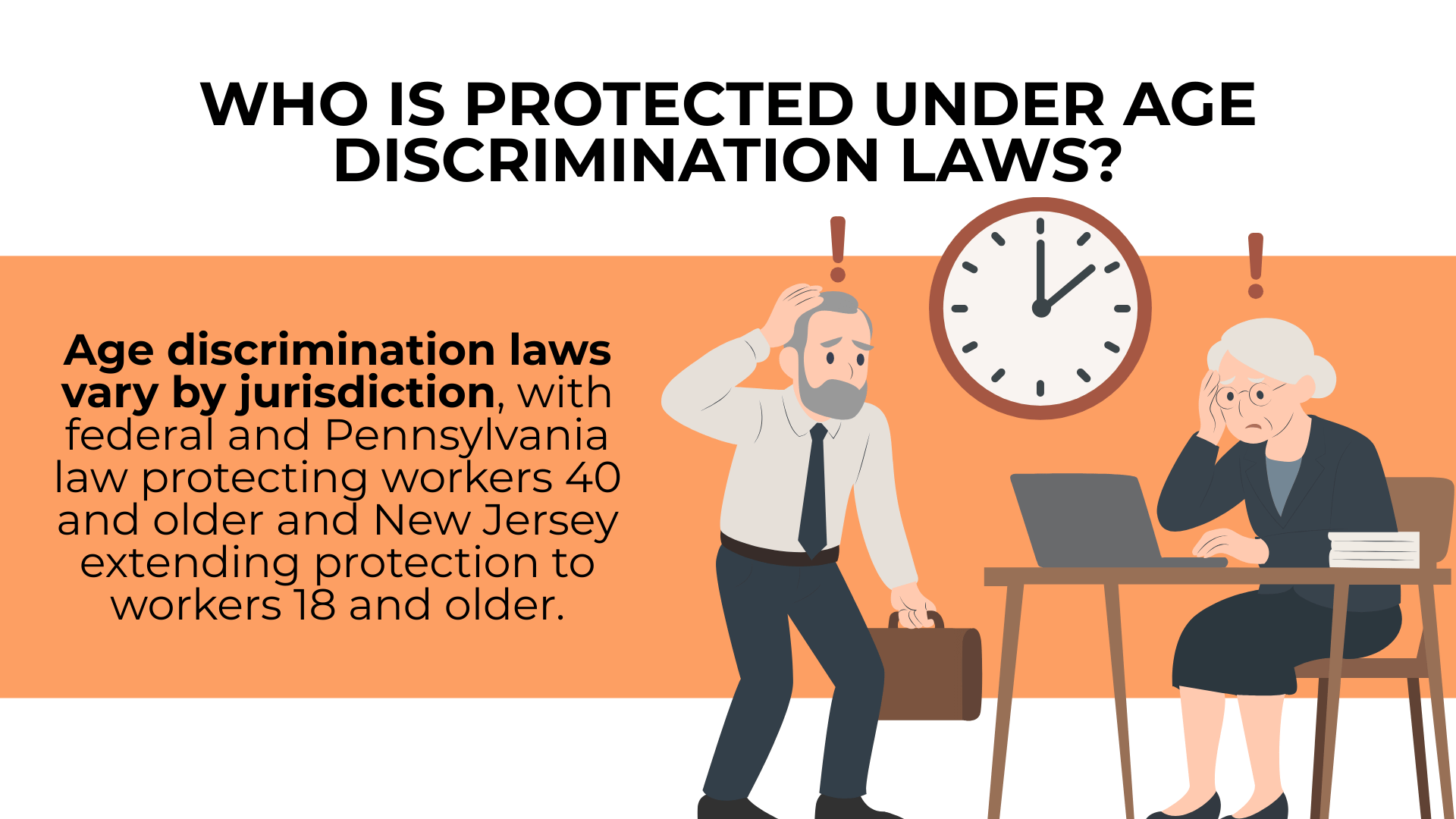
Age discrimination laws protect workers who meet specific age thresholds and can demonstrate circumstances suggesting age-based discrimination. The protected class definition varies by jurisdiction.
Federal and Pennsylvania Age Thresholds
Under the ADEA (29 U.S.C. § 631(a)) and the PHRA (43 P.S. § 954), workers must be at least 40 years old to qualify for protection. This threshold reflects Congress’s determination that workers in their 40s, 50s, and 60s face the most significant age-based barriers in employment.
Importantly, the Supreme Court clarified in O’Connor v. Consolidated Coin Caterers Corp., 517 U.S. 308, 116 S. Ct. 1307 (1996), that the ADEA does not prohibit favoring an older worker over a younger one within the protected class. A 60-year-old replaced by a 45-year-old may still have a valid claim if circumstances suggest age motivated the decision.
New Jersey’s Broader Protection
New Jersey stands apart by protecting workers 18 and older under N.J.S.A. 10:5-12(a). This means younger workers who face discrimination because they are perceived as “too young” can bring claims under the LAD. The statute’s broader reach reflects New Jersey’s policy of interpreting the LAD liberally to maximize its anti-discriminatory impact.
The “Substantially Younger” Replacement Standard
When an older worker is replaced, courts examine whether the replacement was “substantially younger” rather than simply whether they were under 40. The Third Circuit requires a substantial age gap but has not established a bright-line rule. In Baron v. Abbott Laboratories, 672 Fed. Appx. 158 (3d Cir. 2016), the court found a one-year age gap insufficient to support an inference of age discrimination. Courts examine the totality of circumstances when evaluating age differences.
Which Employers Must Follow Age Discrimination Laws?
Not every employer falls under every age discrimination statute. The applicable law depends on employer size and, in some cases, the employer’s governmental status.
Federal ADEA Employer Requirements
The ADEA applies to private employers with 20 or more employees who worked each working day for 20 calendar weeks in the current or preceding year (29 U.S.C. § 630(b)). The Supreme Court’s decision in Mount Lemmon Fire District v. Guido, 586 U.S. 1, 139 S. Ct. 22 (2018), clarified that state and local government employers are covered regardless of their employee count.
Independent contractors generally do not count toward the federal threshold, and the ADEA does not protect independent contractors themselves.
State Law Coverage Differences
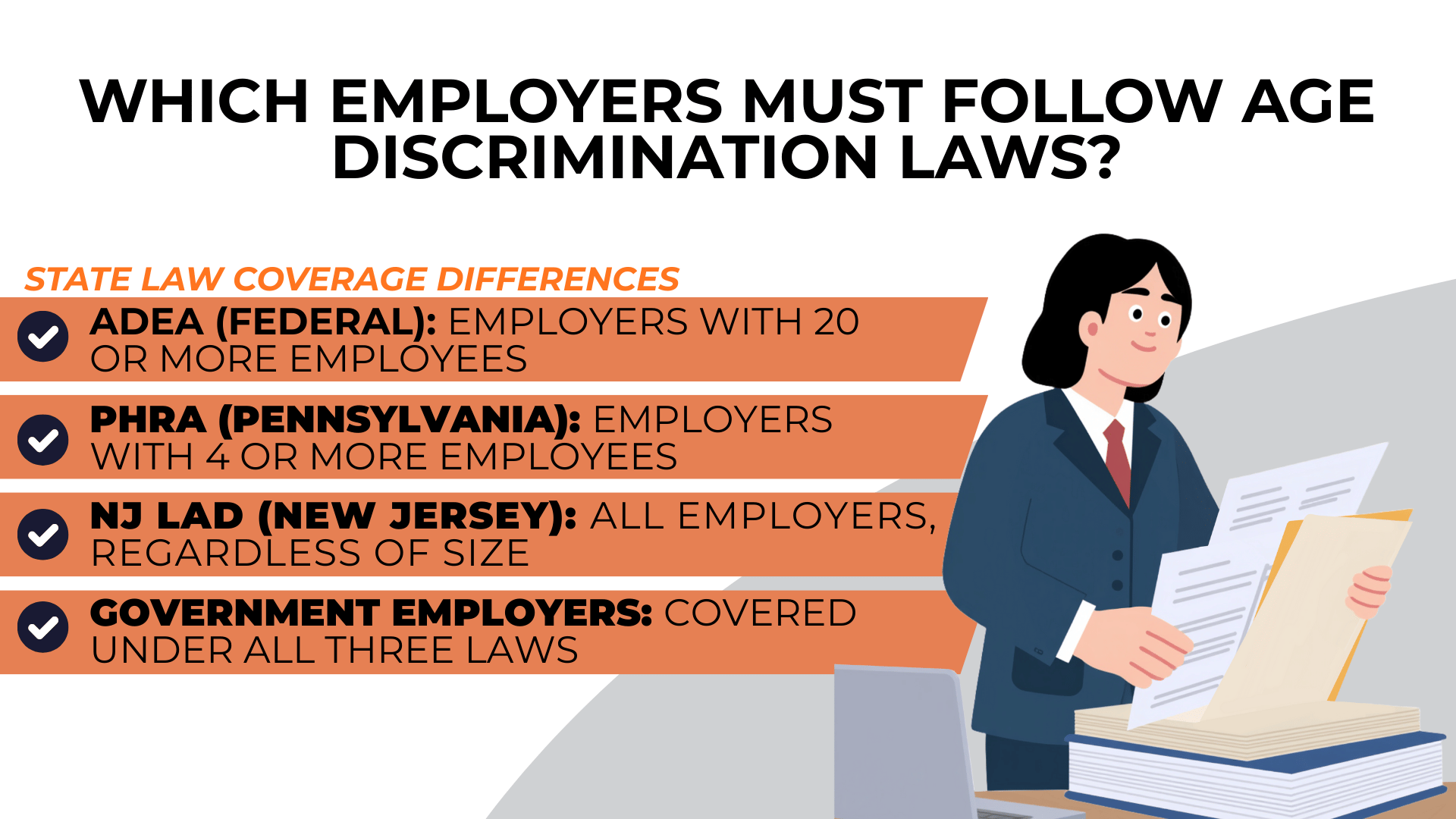
State laws fill gaps left by federal coverage requirements. The following employer thresholds apply:
- ADEA (Federal): Employers with 20 or more employees
- PHRA (Pennsylvania): Employers with 4 or more employees
- NJ LAD (New Jersey): All employers, regardless of size
- Government employers: Covered under all three laws regardless of size
This tiered system means workers at small Pennsylvania businesses (4-19 employees) have PHRA protection but no federal ADEA claim. Workers at very small New Jersey businesses may only have NJ LAD protection.
Individual Supervisor Liability
State laws permit claims against individual supervisors and managers under aiding and abetting theories. Under N.J.S.A. 10:5-12(e), individuals who aid or abet discriminatory conduct can be held personally liable. Pennsylvania permits similar claims under 43 P.S. § 955(e), as recognized in Dici v. Commonwealth of Pennsylvania, 91 F.3d 542 (3d Cir. 1996). The federal ADEA does not provide for individual liability.
Naming individual defendants can add sources of recovery and may affect whether a case can be removed to federal court.
How Do Age Discrimination Claims Work?
Age discrimination claims proceed under established legal theories that determine what a worker must prove to prevail. Understanding these theories helps workers evaluate the strength of potential claims.
Disparate Treatment Claims
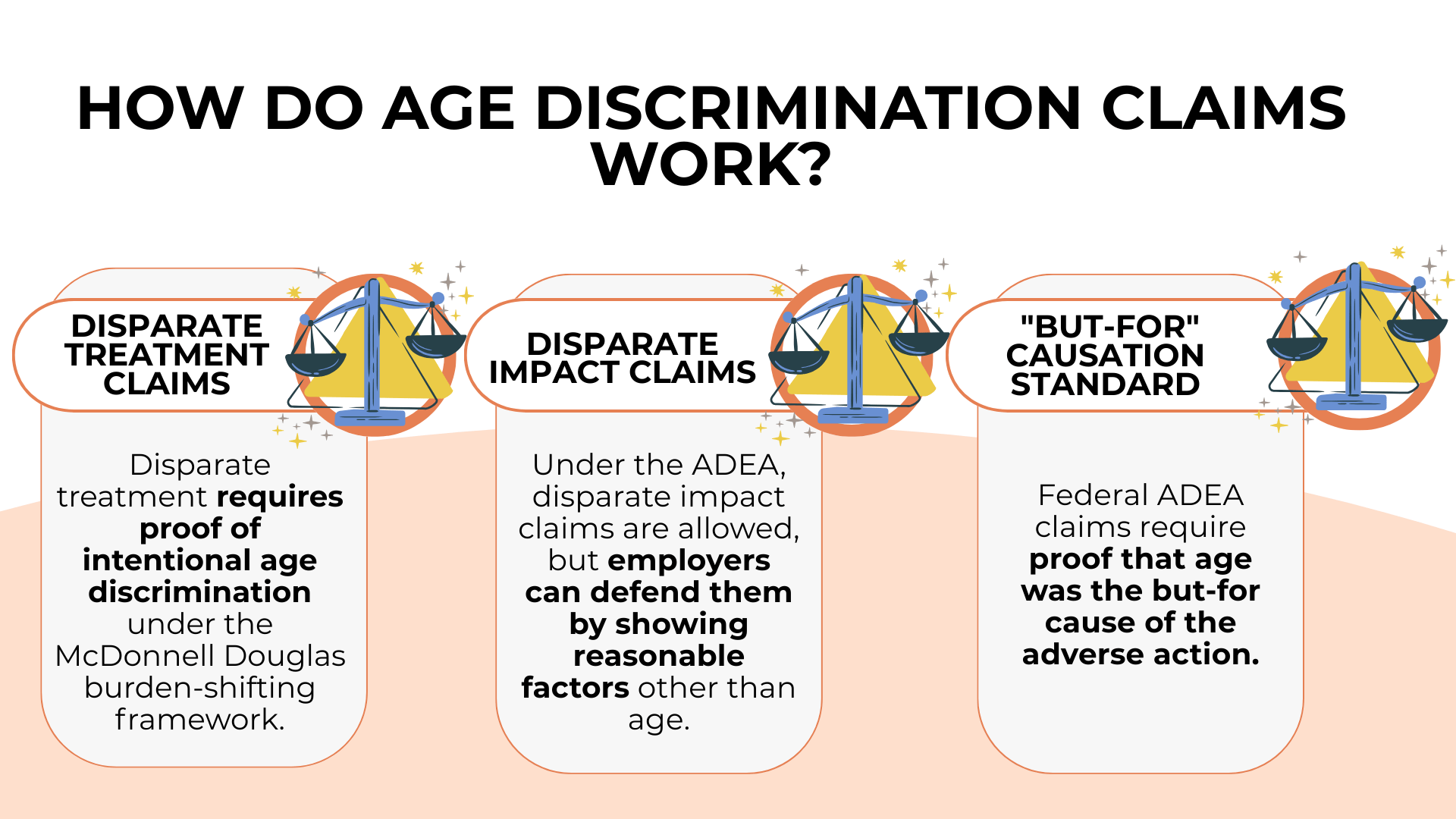
Disparate treatment is the most common theory in age discrimination cases. The worker must prove that their employer intentionally treated them less favorably because of their age. Evidence of intent can be direct—such as statements by decision-makers linking age to the adverse action—or circumstantial, requiring inference from surrounding facts.
Courts apply a burden-shifting framework derived from McDonnell Douglas Corp. v. Green, 411 U.S. 792 (1973). The worker first establishes a basic case of discrimination. The employer then must articulate a legitimate, nondiscriminatory reason for its action. The worker can then prove that reason is a pretext for discrimination.
Disparate Impact Claims
Disparate impact claims challenge facially neutral employment practices that disproportionately harm older workers. The Supreme Court confirmed in Smith v. City of Jackson, 544 U.S. 228, 125 S. Ct. 1536 (2005), that disparate impact claims are available under the ADEA.
However, the employer’s defense is broader than under Title VII. Employers can justify challenged practices by showing they were based on “reasonable factors other than age” (RFOA)—a standard easier to meet than the “business necessity” defense required in other discrimination contexts.
The “But-For” Causation Standard
Federal age discrimination claims require proof that age was the “but-for” cause of the adverse employment action. In Gross v. FBL Financial Services, Inc., 557 U.S. 167, 129 S. Ct. 2343 (2009), the Supreme Court held that ADEA plaintiffs cannot use the “mixed-motive” framework available in other discrimination cases. The worker must prove that the adverse action would not have occurred absent age discrimination.
This heightened standard makes federal ADEA claims more difficult to prove than claims under other anti-discrimination statutes. State laws may apply different—and potentially more favorable—causation standards.
What Are the Deadlines for Filing Age Discrimination Claims?
Missing a filing deadline can permanently bar an age discrimination claim. Each law imposes different time limits, and workers must track multiple deadlines carefully.
Federal EEOC Filing Deadlines
Before filing a federal ADEA lawsuit, a worker must file a charge of discrimination with the Equal Employment Opportunity Commission. In Pennsylvania and New Jersey—both “deferral states” with their own anti-discrimination agencies—the deadline is 300 days from the discriminatory act (29 U.S.C. § 626(d)).
After filing, the worker may file suit 60 days later without waiting for a right-to-sue letter. Alternatively, the worker can wait for the EEOC investigation to conclude and must file suit within 90 days of receiving a Notice of Dismissal or Right to Sue. Courts enforce the 90-day deadline strictly.
Pennsylvania PHRC Requirements
Pennsylvania’s Human Relations Commission requires that workers file administrative complaints within 180 days of the discriminatory act (43 P.S. § 959(h))—a shorter window than the federal 300-day deadline. After filing, workers generally must wait one year for the PHRC to investigate before filing a court action, unless the PHRC dismisses the complaint earlier.
Missing the 180-day PHRC deadline forfeits the state claim, though a federal ADEA claim may survive if the EEOC charge was filed within 300 days.
New Jersey’s Direct Court Access
New Jersey workers have a significant procedural advantage: the NJ LAD does not require administrative exhaustion before filing suit. Workers may file directly in Superior Court within the two-year statute of limitations (N.J.S.A. 2A:14-2(a)). This allows faster access to court and avoids administrative delays.
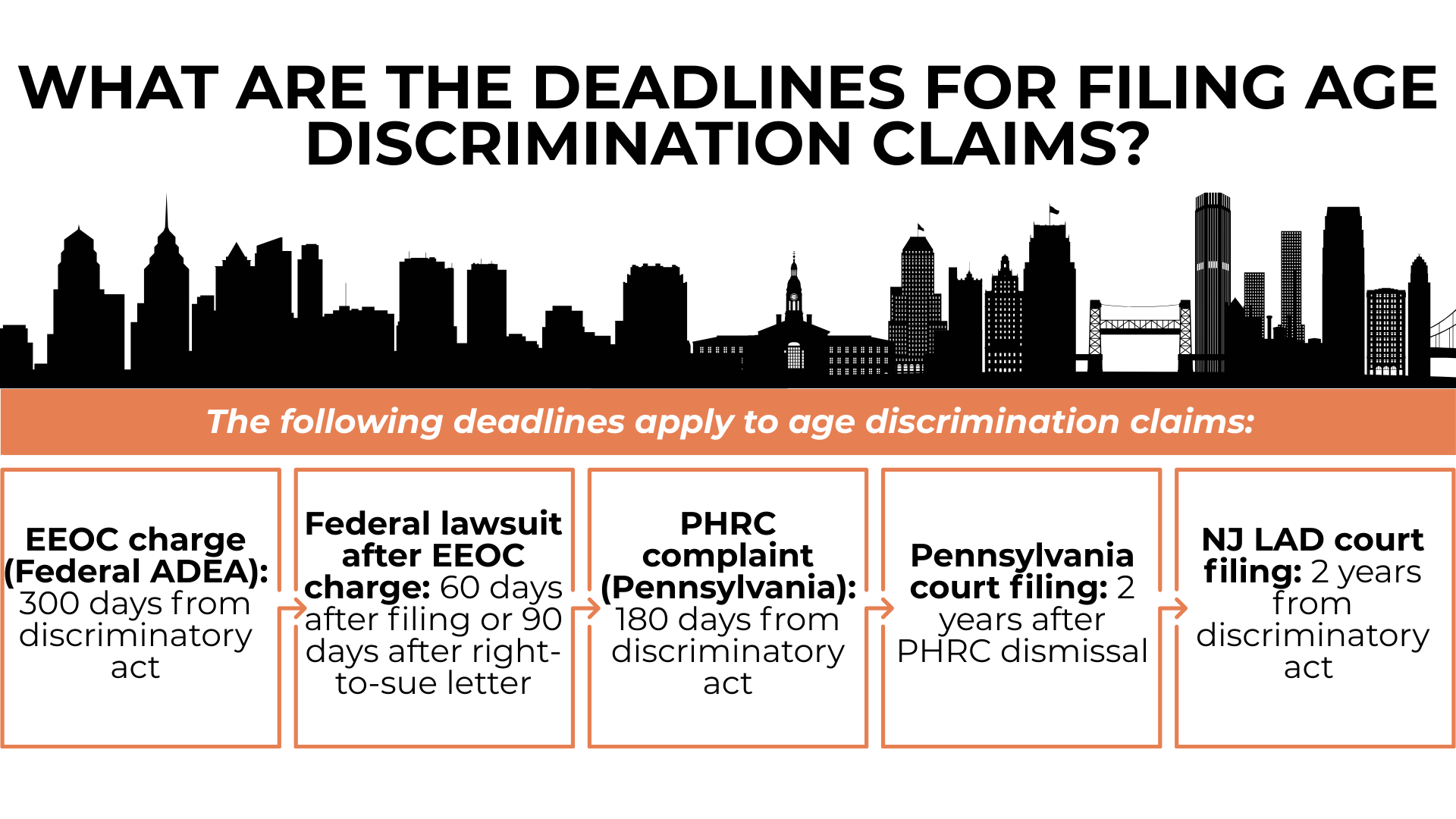
The following deadlines apply to age discrimination claims:
- EEOC charge (Federal ADEA): 300 days from discriminatory act
- Federal lawsuit after EEOC charge: 60 days after filing (no letter required) or 90 days after right-to-sue letter
- PHRC complaint (Pennsylvania): 180 days from discriminatory act
- Pennsylvania court filing: 2 years after PHRC dismissal
- NJ LAD court filing: 2 years from discriminatory act (no administrative filing required)
Because these deadlines are strict, workers who suspect age discrimination should seek legal guidance promptly.
What Remedies Are Available Under Age Discrimination Laws?
The available remedies vary significantly depending on which law applies. Understanding these differences helps workers and their attorneys select the most advantageous claims.
Federal ADEA Remedies
The ADEA provides the following remedies (29 U.S.C. § 626(b)):
- Back pay for lost wages
- Front pay when reinstatement is not feasible
- Liquidated damages equal to back pay for “willful” violations
- Attorney’s fees and costs
Notably, the ADEA does not permit compensatory damages for emotional distress or punitive damages. The Supreme Court defined “willful” in Trans World Airlines, Inc. v. Thurston, 469 U.S. 111, 105 S. Ct. 613 (1985), as requiring that the employer knew or showed reckless disregard for whether its conduct violated the ADEA.
New Jersey LAD Remedies
The NJ LAD provides the most robust remedies:
- Back pay and front pay
- Uncapped compensatory damages, including emotional distress
- Punitive damages for especially egregious conduct
- Attorney’s fees with potential enhancement of 20-35% (up to 100% in exceptional cases per Rendine v. Pantzer, 141 N.J. 292, 661 A.2d 1202 (1995))
- Jury trial rights in Superior Court
Punitive damages require proof by clear and convincing evidence that upper management participated in or was willfully indifferent to the discrimination.
Pennsylvania PHRA Remedies
The PHRA provides:
- Back pay and front pay
- Uncapped compensatory damages, including emotional distress
- Attorney’s fees
- No punitive damages (Hoy v. Angelone, 720 A.2d 745 (Pa. 1998))
- No jury trial right in Pennsylvania state court
The lack of punitive damages and jury trial rights makes the PHRA less favorable than the NJ LAD for damages purposes, though its lower employer threshold (4 employees) provides coverage where federal law does not apply.
How Common Are Age Discrimination Claims?
Age discrimination charges have increased significantly in recent years, reflecting both an aging workforce and heightened awareness of workplace age bias.
National Filing Trends
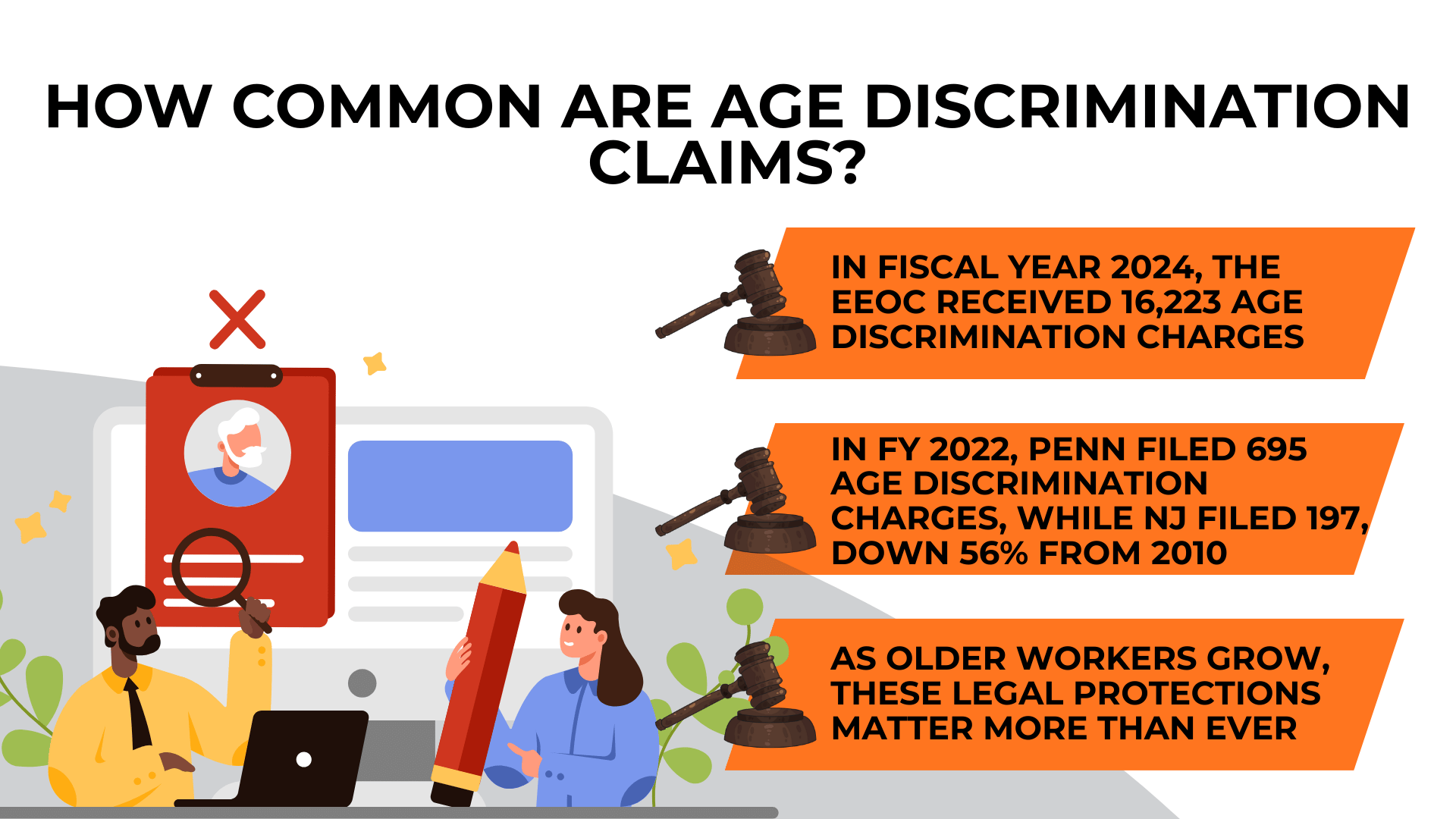
According to EEOC Enforcement and Litigation Statistics (2025), workers filed 16,223 age discrimination charges with the EEOC in fiscal year 2024. This represents a 41% increase from the 11,500 charges filed in fiscal year 2022. Age discrimination charges comprised approximately 18% of the 88,531 total discrimination charges filed with the EEOC that year.
The EEOC’s 2024 Annual Performance Report shows the agency secured nearly $700 million for discrimination victims across all charge types—the highest monetary recovery in the agency’s recent history.
Pennsylvania and New Jersey Statistics
Pennsylvania ranked fifth nationally for workplace discrimination charges, according to a Philadelphia Inquirer analysis of EEOC data (2024). According to EEOC state statistics (2022), Pennsylvania workers filed 695 age discrimination charges in fiscal year 2022, representing 17.1% of total Pennsylvania charges. Pennsylvania accounted for 6% of all age discrimination charges filed nationally—disproportionately high given the state’s 3.9% share of the U.S. population.
New Jersey workers filed 197 age discrimination charges in fiscal year 2022, representing 15.5% of total New Jersey charges, according to EEOC state data. New Jersey charges have declined 56% from their 2010 peak of 448.
The Aging Workforce Context
These legal protections matter more as the workforce ages. According to Bureau of Labor Statistics data (2025), 38.8 million workers age 55 and older participate in the U.S. labor force, comprising 23.1% of all workers. The BLS Beyond the Numbers report (2025) notes that labor force participation for workers 65 and older has nearly doubled since 1985, rising from 10.8% to 19.5% in 2024.
In Pennsylvania specifically, state demographic data (2024) shows that 20% of the population is now 65 or older, and adults 65 and older now outnumber children. In New Jersey, workforce analysis (2022) indicates that 27% of the state’s workforce is now 55 or older, up from 20% in 2010.
Frequently Asked Questions
Does age discrimination law only protect workers over 40?
Under federal law and Pennsylvania’s PHRA, workers must be 40 or older to qualify for protection. New Jersey is different. The NJ LAD protects workers 18 and older, meaning younger workers who face discrimination because of their age—such as being perceived as “too young”—can bring claims under New Jersey law.
Can I sue for age discrimination if my employer has fewer than 20 employees?
The federal ADEA only applies to employers with 20 or more employees. However, Pennsylvania’s PHRA covers employers with 4 or more employees, and New Jersey’s LAD applies to all employers regardless of size. Workers at small businesses should evaluate state law claims even when federal law does not apply.
Do I have to file with the EEOC before suing for age discrimination?
For federal ADEA claims, yes—you must file a charge with the EEOC within 300 days of the discriminatory act before filing suit. Pennsylvania requires filing with the PHRC within 180 days. New Jersey is different: the NJ LAD allows workers to file suit directly in Superior Court without any administrative filing, as long as the lawsuit is filed within two years.
What is the deadline for filing an age discrimination claim in Pennsylvania?
Pennsylvania has two relevant deadlines. For state PHRA claims, workers must file with the Pennsylvania Human Relations Commission within 180 days of the discriminatory act. For federal ADEA claims, workers in Pennsylvania have 300 days to file with the EEOC. Missing the 180-day PHRC deadline forfeits the state claim but preserves the federal claim if the EEOC charge was timely filed.
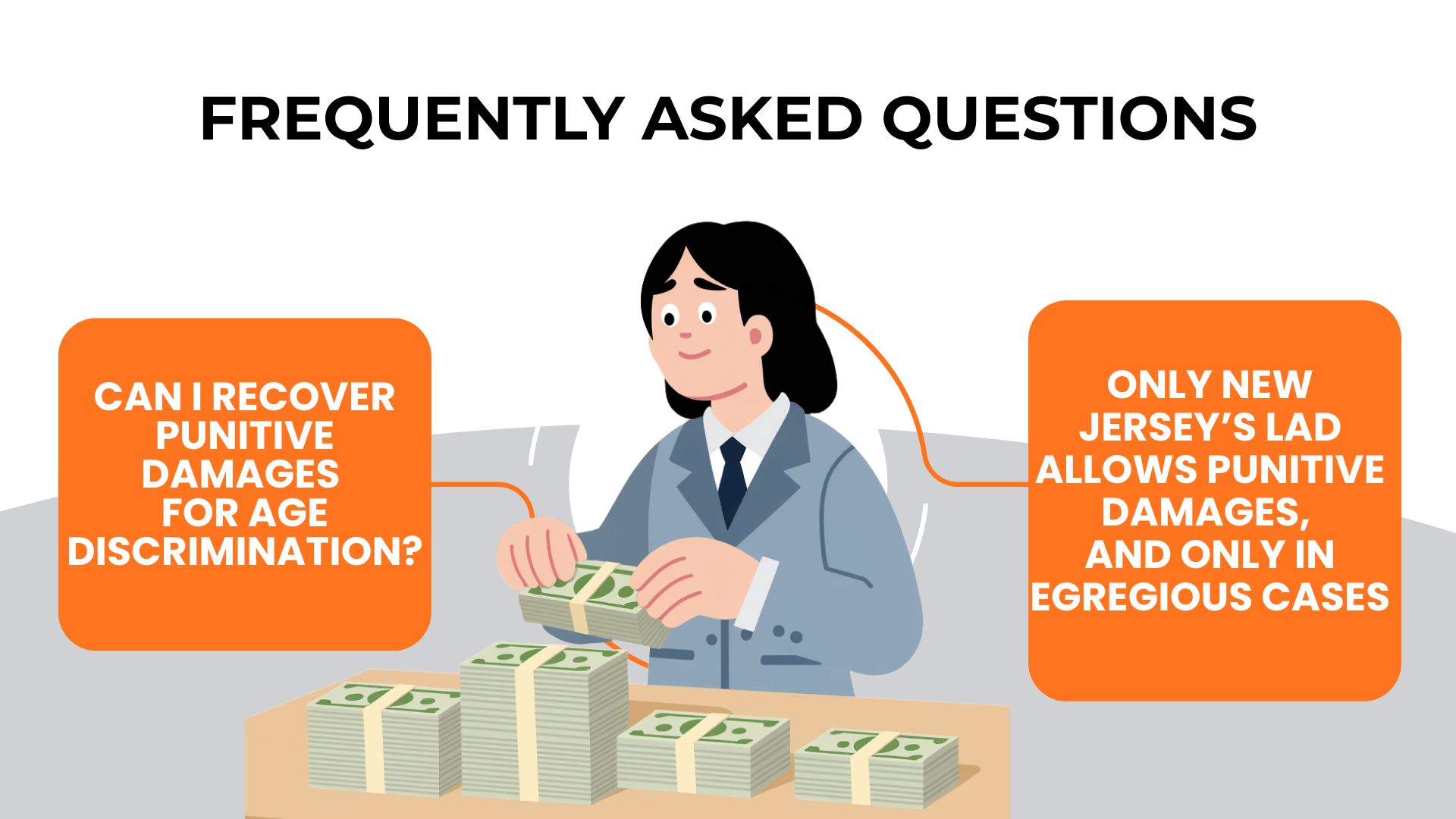
Can I recover punitive damages for age discrimination?
It depends on which law applies. The federal ADEA does not allow punitive damages. Pennsylvania’s PHRA also does not permit punitive damages, as the state Supreme Court held in Hoy v. Angelone. New Jersey’s LAD does allow punitive damages for especially egregious conduct, but they require proof by clear and convincing evidence that upper management participated in or was willfully indifferent to the discrimination.
Protecting Your Rights Under Age Discrimination Laws
Age discrimination laws provide meaningful protections for workers, but those protections come with strict procedural requirements and tight deadlines. The differences between federal, Pennsylvania, and New Jersey law can significantly affect which claims are available, what remedies you can recover, and how quickly you must act.
Workers who believe they have experienced age discrimination face time-sensitive decisions. The 180-day PHRC deadline, 300-day EEOC deadline, and two-year NJ LAD deadline run from the date of the discriminatory act—and missing these deadlines can permanently bar otherwise valid claims.
If you have questions about age discrimination laws and how they apply to your situation, contact The Lacy Employment Law Firm to discuss your options.